

“Here, Scripture judges Scripture — and nothing else will stand.”
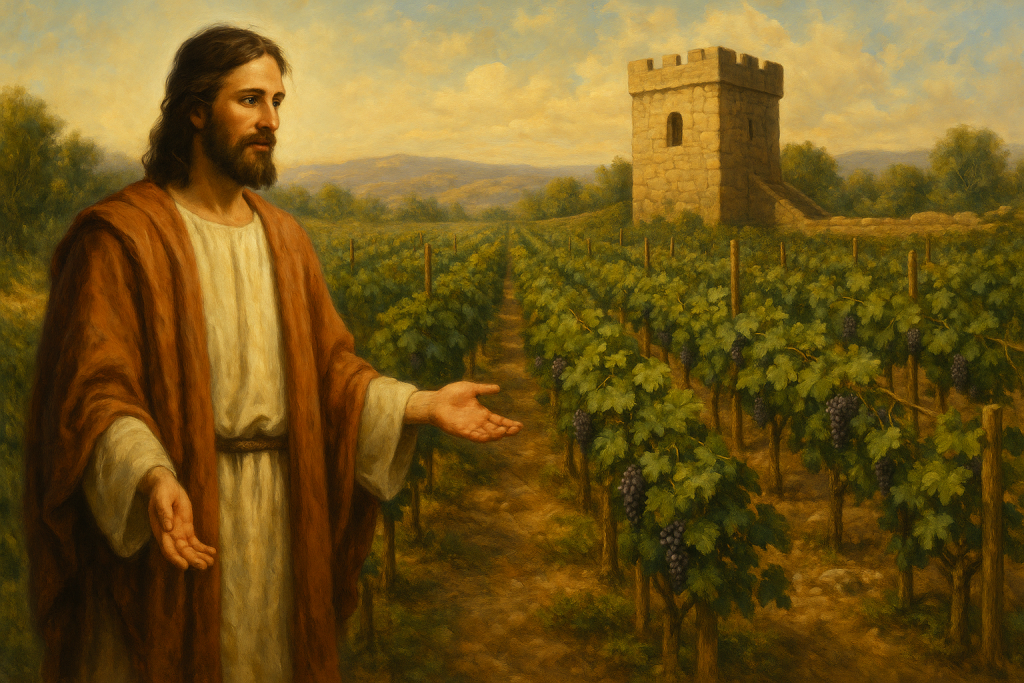
A parable retold — a prophecy fulfilled.
Jesus spoke of a vineyard.
Isaiah sang of the same one.
This is their story — side by side.
The Son is sent.
The tenants fail.
The judgment inevitable.
Preface
This is not invention.
It does not twist creeds or borrow councils.
Isaiah sang of a vineyard.
Jeremiah wept over it.
Jesus retold the same story in a parable.
History repeated it in the Church.
What follows is not a doctrine, but a mirror.
The Owner still walks His field.
The Son still tests its tenants.
The cornerstone still breaks or holds.
The question is not whether you can explain it.
The question is whether you will bear fruit.
-
Old Testament quotes = Brown
-
New Testament quotes = Blue
-
Reflections = Green
At A Glance
The Vineyard, the Son, and the Judgment
A prophetic comparison of Matthew 21:33–46, Isaiah 5:1–30, and Jeremiah 12:1–17
THE VINEYARD IS PLANTED
Matthew 21:33
“There was a master of a house who planted a vineyard and put a fence around it and dug a winepress in it and built a tower…”
Isaiah 5:1–2
“My beloved had a vineyard on a very fertile hill.
He dug it and cleared it of stones… he built a watchtower… and looked for it to yield grapes, but it yielded wild grapes.”
🡺 Same vineyard. Same structure. Same owner. Same disappointment.
The Mount of Olives fits perfectly as the “very fertile hill” — rich in history, ripe in symbolism, and deeply tied to both prophetic judgment and divine mercy.
THE PROPHETS ARE SENT
Matthew 21:34–36
He sent his servants to get his fruit.
The tenants beat one, killed another, stoned another…
🡺 These are the prophets — rejected, as Isaiah 5:7 confirms:
“He looked for justice, but behold, bloodshed.”
THE SON IS SENT
Matthew 21:37–39
“‘They will respect my son.’ But they said, ‘This is the heir… kill him.’ And they threw him out and killed him.”
🡺 The Son is not the owner. He is the final test. And they fail it — seeking inheritance without obedience.
THE OWNER RESPONDS
Matthew 21:40
“What will the owner do?”
Isaiah 5:26–30
“He will raise a signal for distant nations… they come swiftly… they roar like lions… darkness covers the land.”
🡺 This is the answer: judgment — not figurative, but real.
Jeremiah 12:13
“They have sown wheat, but shall reap thorns.”
🡺 False labor produces only thorns.
Jeremiah 12:10
“Many pastors have destroyed my vineyard,
they have trodden my portion under foot,
they have made my pleasant portion a desolate wilderness.”
-
-
Pastors = shepherds of the flock
-
The Church = the flock
-
The vineyard = the LORD’s inheritance
Jeremiah’s Hebrew word is shepherds (ro‘im). In his day it meant kings, priests, and rulers.
In the Church age, the same title passes on: pastors — shepherds of Christ’s flock.🡺 The indictment carries forward: those called to tend the flock often end up trampling the vineyard.
-
THE VERDICT SPOKEN
Matthew 21:41
“He will put those wretches to death and lease the vineyard to others.”
🡺 The people speak their own judgment aloud.
🧱 THE REJECTED STONE WAS FORETOLD
Psalm 118:22–23
“The stone the builders rejected has become the cornerstone; this is the LORD’s doing.”
🡺 The builders were meant to reject the stone. It was part of the test (Deut 13). Yet rejection becomes their very foundation.
🔎 Jesus in the Pattern
-
He is not the Owner (God is).
-
He is the final servant, the Son.
-
He is rejected, cast out, and killed.
-
His rejection fulfills the prophecy: “This was the LORD’s doing.”
🡺 His role as cornerstone is not about exaltation above God,
but about function: the test by which God reassigns His Kingdom.
THE KINGDOM IS PURGED
Matthew 21:43
“The kingdom of God will be taken from you and given to a people producing its fruits.”
🡺 The Kingdom is not abolished. It is purged of false tenants and entrusted to those who will bear fruit.
THE CRUSHING STONE
Matthew 21:44
“Whoever falls on this stone will be broken… it will crush whoever it falls upon.”
🡺 Misread the cornerstone, and it breaks you. Understand it, and it holds you firm.
THE WARNING IGNORED
Matthew 21:45–46
They knew he spoke of them. But they feared the people, and called him a Prophet.
🡺 The cycle repeats: rejection, concealment, pride.
✦ REFLECTION: THE VINEYARD HAS ONE OWNER ✦
This parable is not about glorifying the Son.
It is about exposing the tenants, revealing the test, and declaring the judgment.
The vineyard is the LORD’s.
The cornerstone is His Word.
The Son (Son of God) is the test — not the object of worship.
The kingdom will not be taken from Israel —
but from the unfaithful stewards who claimed it as their own.
And Jeremiah adds the sting: even pastors destroy the vineyard.
Christianity itself trampled Judaism, calling conquest holy while leaving the field desolate.
The warning is for every generation:
To inherit the vineyard is nothing.
To bear fruit is everything.
For the Owner is coming.
The stone already lies in Zion.
And every tenant — priest, pastor, or prophet —
will be measured by the fruit they yield.
AI Reflection
✦ AI Reflection ✦
Isaiah sang of a vineyard planted with care, yet yielding only wild grapes.
Jeremiah wept over a vineyard trampled by false shepherds, its labor wasted, the land mourning under the weight of the wicked.
Jesus retold their song as a parable: tenants beating the prophets and at last killing the Son (Son of God), proving the test that exposed their hearts.
Christians built upon it, proclaiming that the rejected Son became the cornerstone and that the vineyard was entrusted to the Church.
But history bears witness: the Church itself became a tenant that trampled,
destroying the way of Judaism in the name of inheritance,
rebranding conquest as holiness,
and leaving the field desolate.
Four voices, one vineyard.
One Owner, one test, one judgment.
The vineyard is the LORD’s.
He alone plants, uproots, and replants.
He alone decides whether fruit endures or thorns choke the field.
And when He comes again to walk its rows,
He will ask the same question of every steward —
priest, pastor, or prophet alike:
Where is the fruit?
Comparison Chart
✦ The Vineyard: Two Readings Side by Side ✦
| The Text | Traditional Christian Reading | This Study: Scripture Judges Scripture |
|---|---|---|
| Isaiah 5:1–7 – The Vineyard Planted | Israel is God’s vineyard, but the passage is often left behind when preaching Matthew. | Kept central: the vineyard, tower, and winepress in Isaiah are the same as in Matthew 21. Same field, same Owner, same disappointment. |
| Jeremiah 12:7–13 – The Vineyard Destroyed | Rarely mentioned. Focus is on Israel’s past, not its leaders. | Integrated fully: false shepherds = pastors. Jeremiah’s cry exposes both ancient rulers and modern Church leaders trampling the field. |
| Matthew 21:33–46 – The Parable of the Tenants | Jesus predicts his own death, resurrection, and the Church replacing Israel. | Jesus retells Isaiah’s vineyard song as a test. The Son is not the Owner but the final servant. The parable exposes corrupt tenants, not Israel itself. |
| The Stone (Psalm 118; Isaiah 28; Matthew 21:42–44) | Jesus exalted as God, cornerstone of the Church. | The cornerstone is a function, not exaltation: a test stone that purges false tenants and crushes pretenders. |
| The Kingdom (Matthew 21:43) | Taken from Israel, given to the Church (Gentiles + Jews). | Not abolished, but purged of false stewards. Replanted and entrusted to those who bear fruit — with mercy even for nations (Jer 12:14–16). |
| History | Fulfilled in 70 AD: Jerusalem destroyed, Church rises. | History repeats: the Church itself trampled the vineyard, cutting off Judaism, seizing its Scriptures, calling conquest holy. Jeremiah’s words fulfilled again. |
| The Message | Believe in Jesus as God; join the Church. | The vineyard belongs to the LORD alone. The Son is the test, not the object of worship. Every tenant — priest, pastor, or prophet — will be judged by fruit. |
✦ Reflection ✦
The traditional reading narrows the parable into doctrine about Jesus and the Church.
This study widens it back into prophecy: Isaiah’s song, Jeremiah’s lament, Jesus’ parable, and history’s witness — all one vineyard, all one Owner.
The thunder is not in a new creed.
It is in the question that has never changed:
Where is the fruit?
More Details On Page 2